
To honor the men and women who flew and trained at Luke Field, Arizona, during World War II.
87th Sub-Depot Maintenance
As important as the 87th Sub-Depot’s Supply function was, the Maintenance function was just as important to Luke Field. The 87th Sub-Depot Maintenance basically did all of the aircraft maintenance that was not done by the flight line maintainers. Some of those maintenance functions were manufacturing or repairing aircraft parts and equipment, cleaning and packing parachutes, and planning, scheduling, and tracking all of that maintenance. Today, some of those numerous functions are being done in the various support squadrons in a wing.
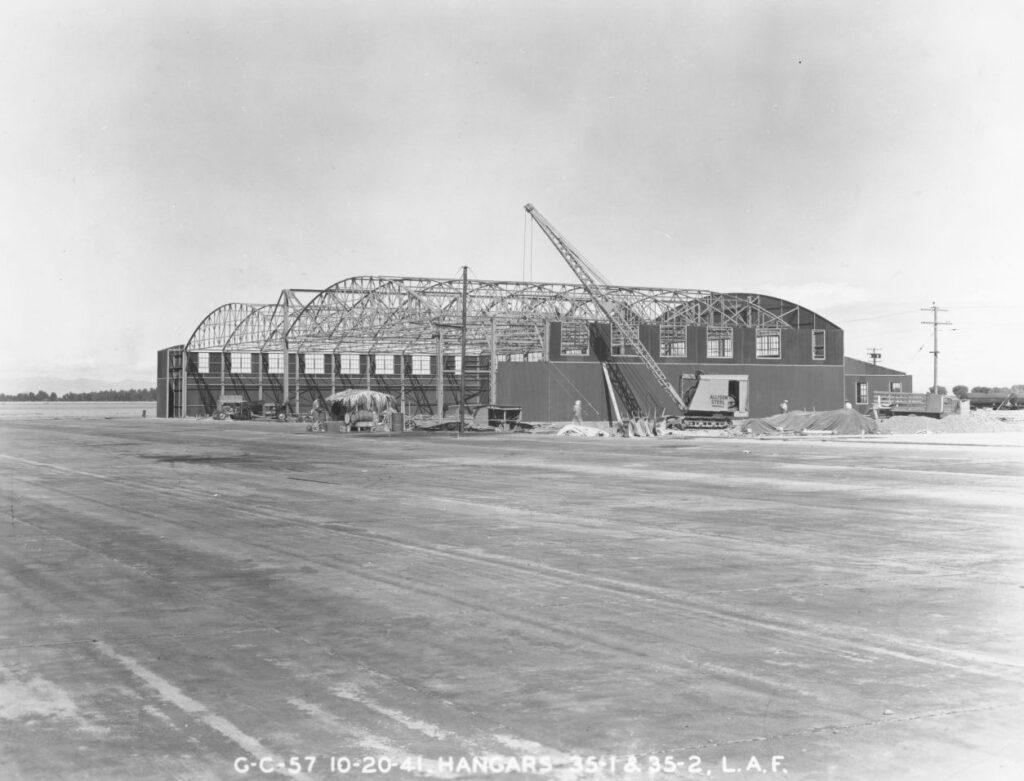
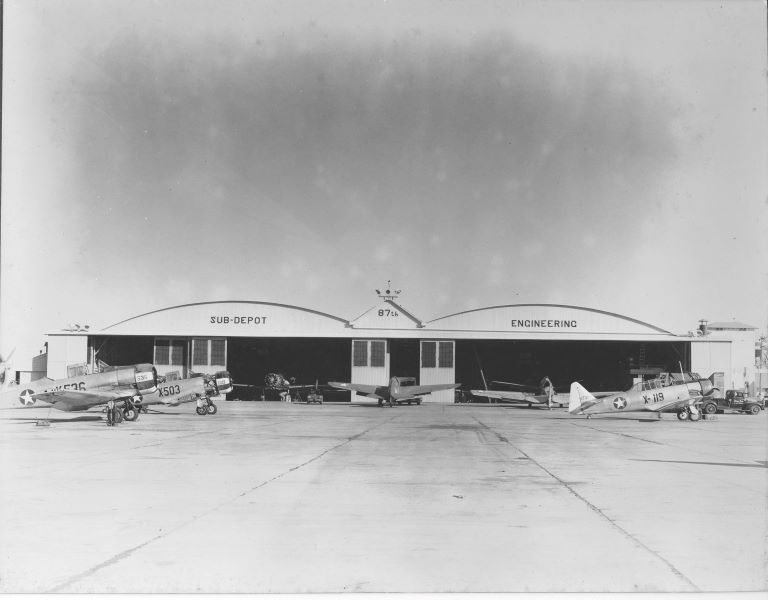
These two photos show the north Sub-Depot hangar at two different times. On the left, this photo was taken on October 20, 1941. It shows the north Sub-Depot hangar under construction. The other shows the hangar when it was finished later in 1942. (Luke Field Photographic Section)
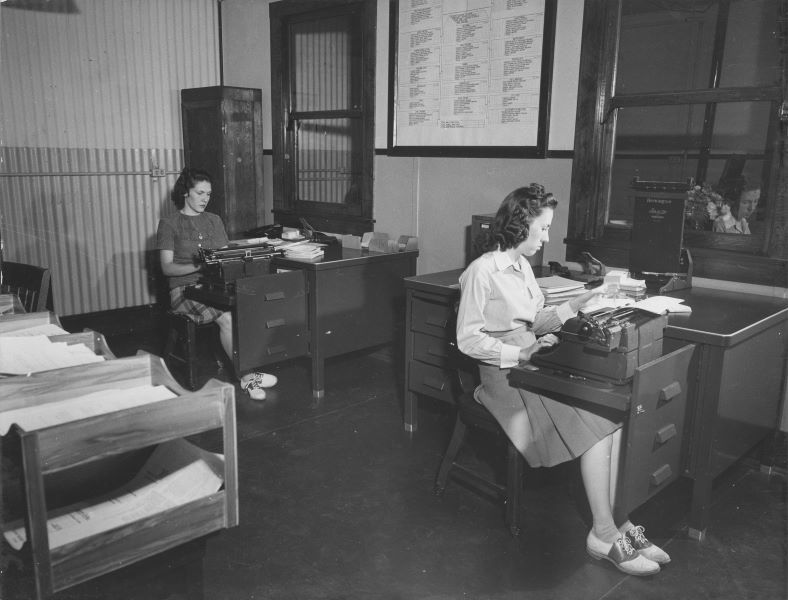
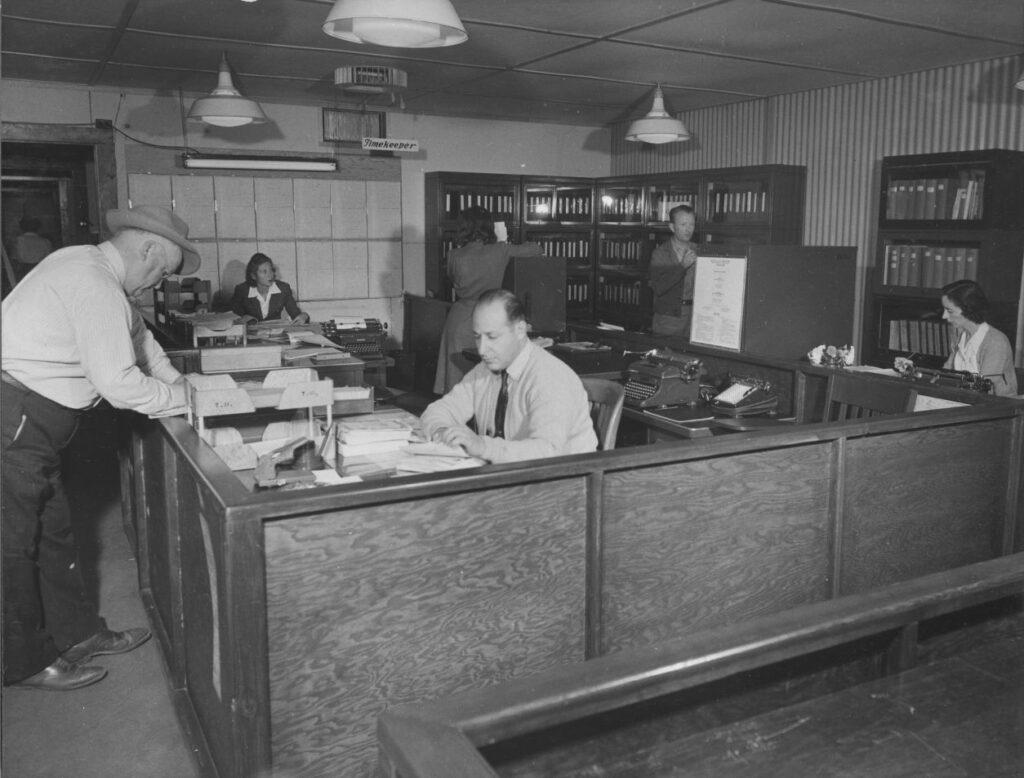
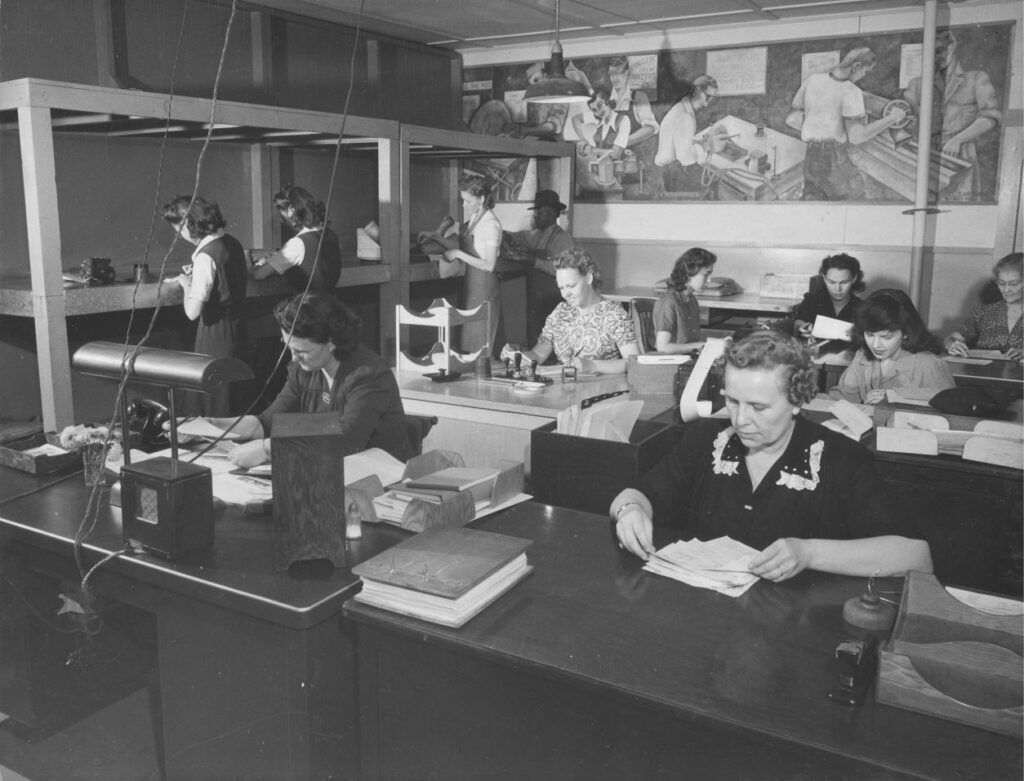
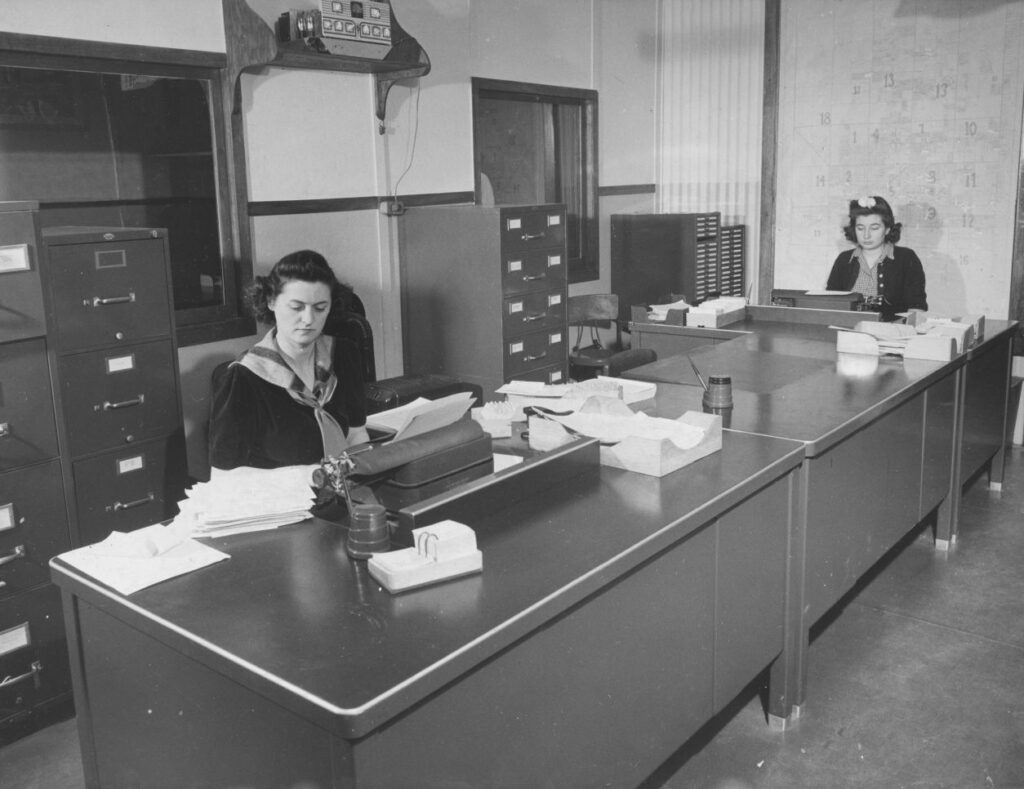
Inside the hangar were a number of offices that processed the paperwork required to run the Sub Depot’s Maintenance Section. Going clockwise from above to the left, the photos show the Mail and File Section, the Time Keeper’s Office, Production Control Section, and Personnel Records Section. (Luke Field Photographic Section)
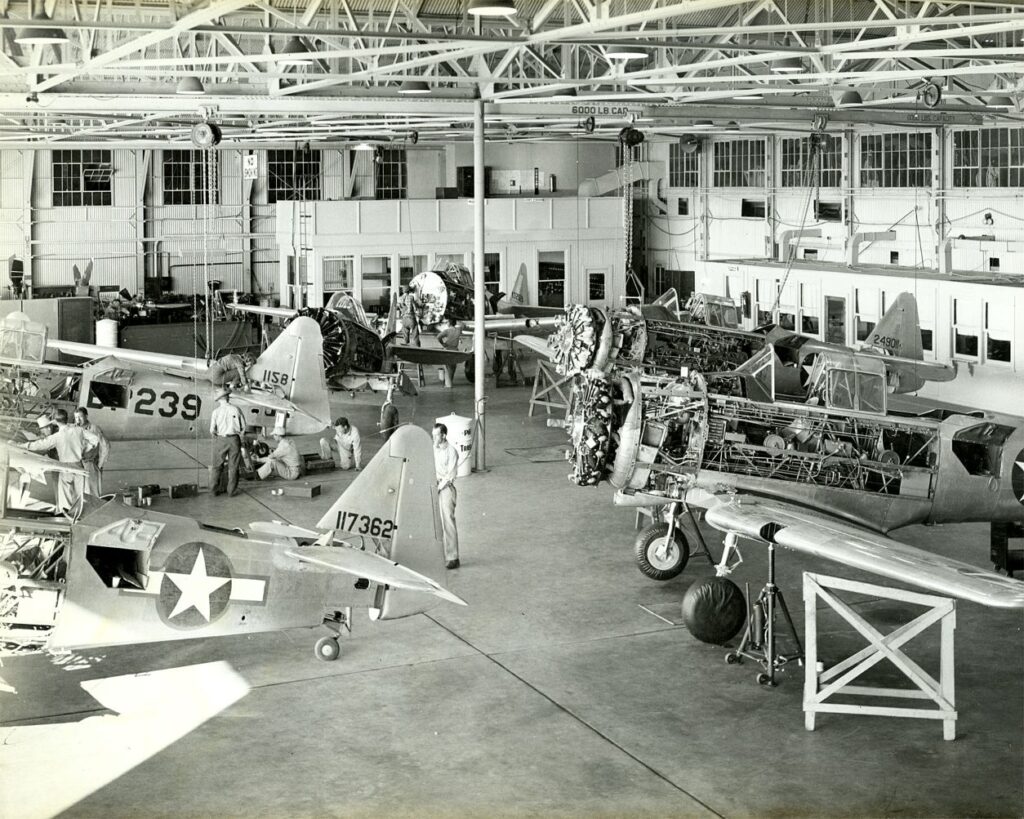
Inside the north hangar was a place for heavy aircraft maintenance. Here six AT-6 Texans are in various states of repair. Heavy aircraft maintenance included the standard periodic (based on flight time) inspection/maintenance and to fix damaged aircraft. The key was scheduling. Periodic inspections depended upon flight time. Otherwise, the schedulers had to decide which aircraft could be fixed and when. In other words, which ones did they have the parts for. If parts were available, those aircraft would be scheduled for maintenance. (Luke Field Photographic Section)
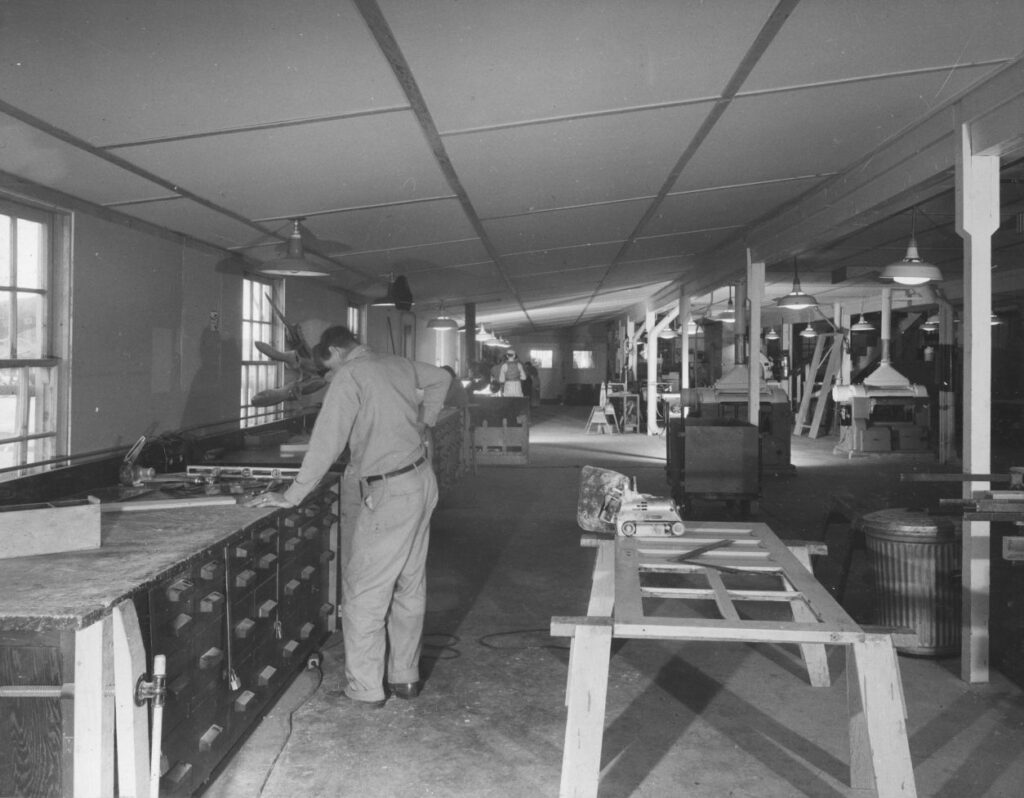
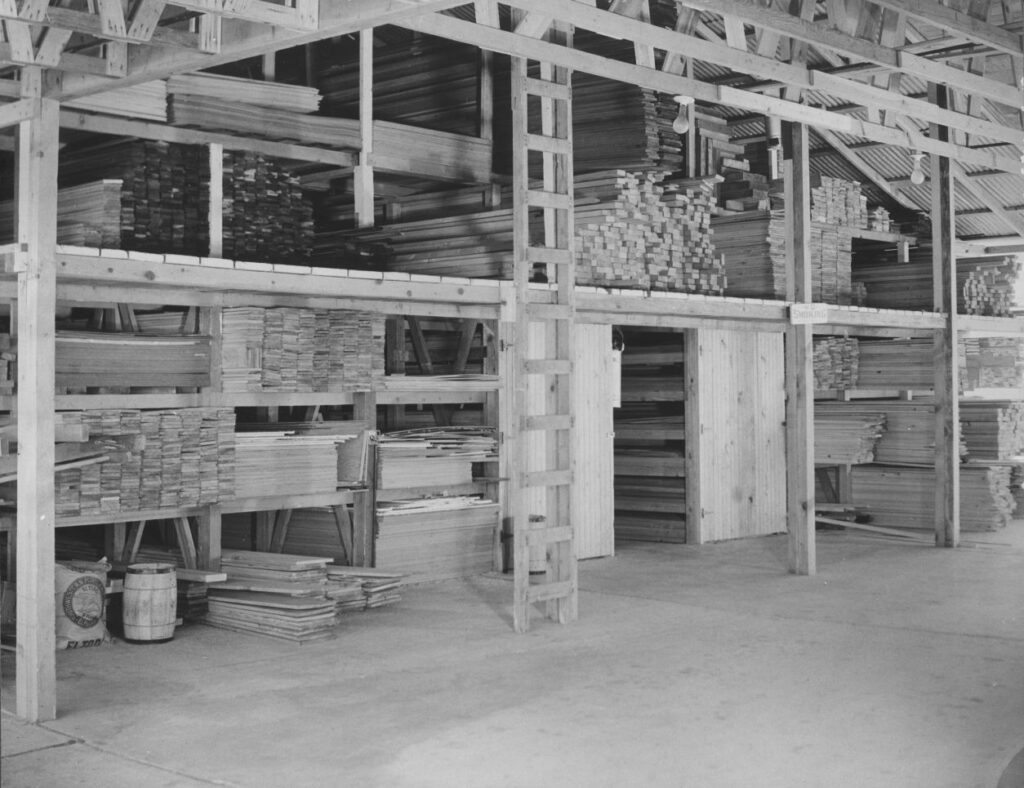
Since almost all of the buildings and some of the aircraft structures were made of wood, the 87th Sub-Depot had a wood mill. In the photo on the left has in the foreground on the right is a door on saw horses, with a sander and a framing square sitting on top of the door. In the photo on the right is the lumber storage for the wood mill. (Luke Field Photographic Section)
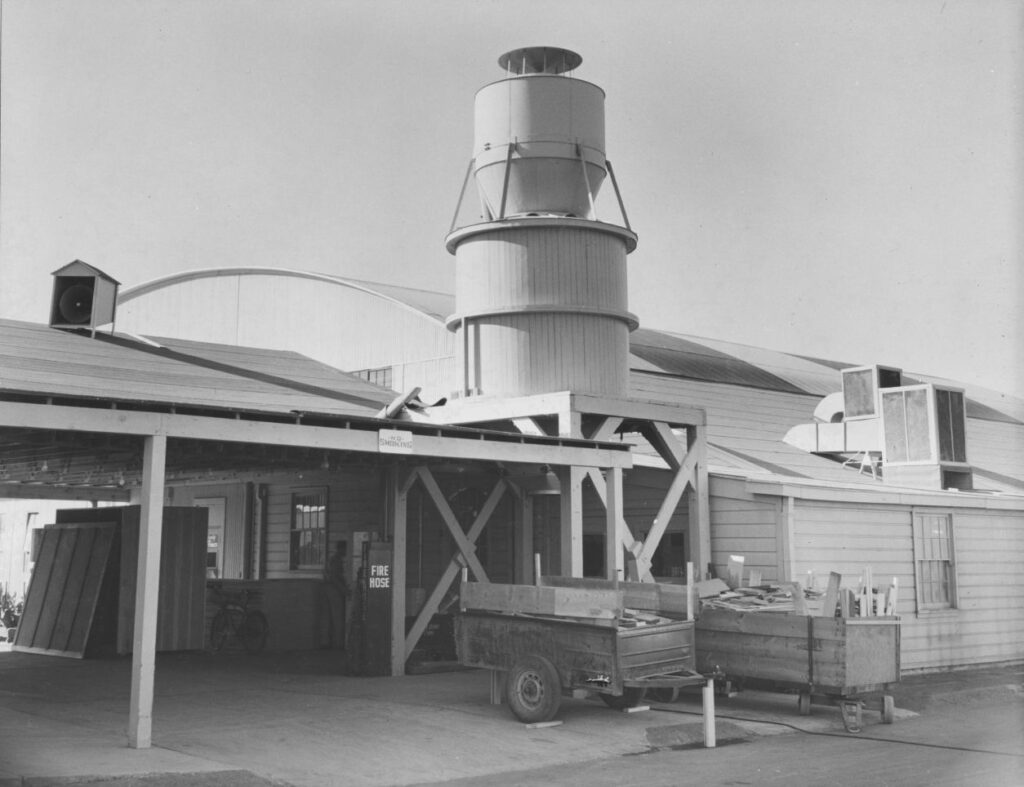
Considering all of the sawdust the wood mill created, the 87th Sub-Depot needed a way to get rid of that saw dust and the scrap lumber. At the time, the normal way to get rid of sawdust and scrap lumber was to burn them. Here is the Saw Dust Disposal Facility. Considering the entire base was made out of wood, they needed to suppress the sparks form the furnace. In the center of the photo is the tower over the furnace. The two trailers hold various pieces of scrap lumber. (Luke Field Photographic Section)
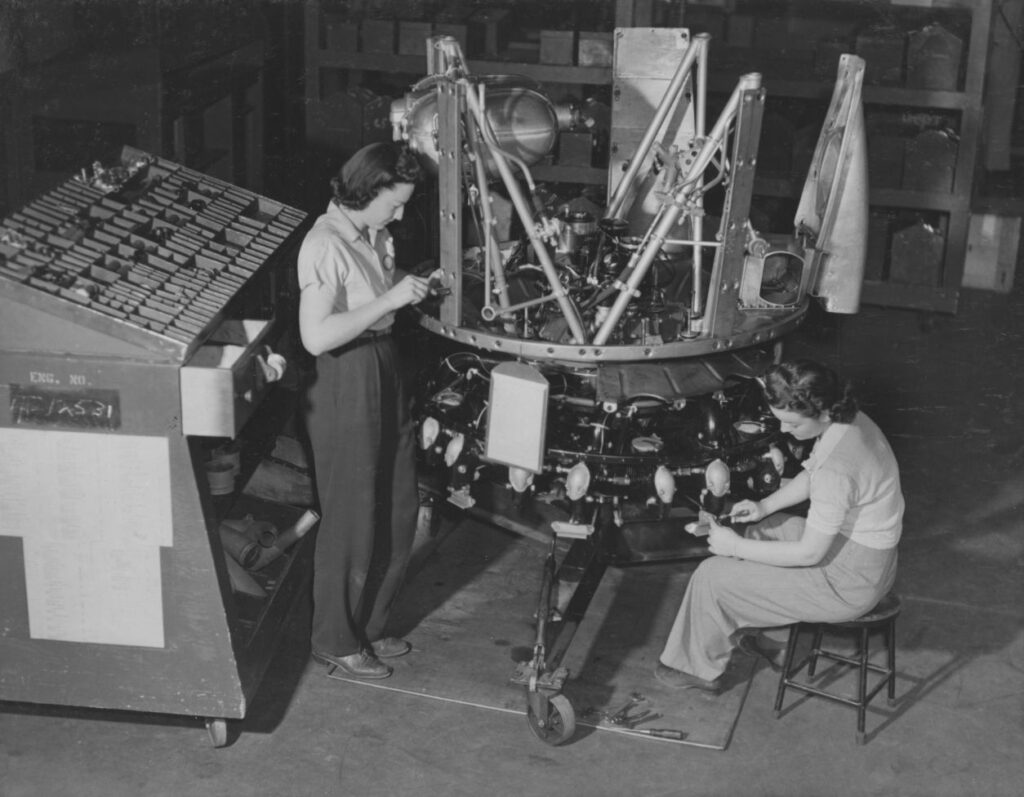
Two female civilian employees work on a rotary engine, probably an AT-6 Texan’s Pratt & Whitney R-1340-49 engine. Rotary engines were both built and torn down standing on their nose. If the propeller was installed, it would be sitting on or in the ground. (Luke Field Photographic Section)
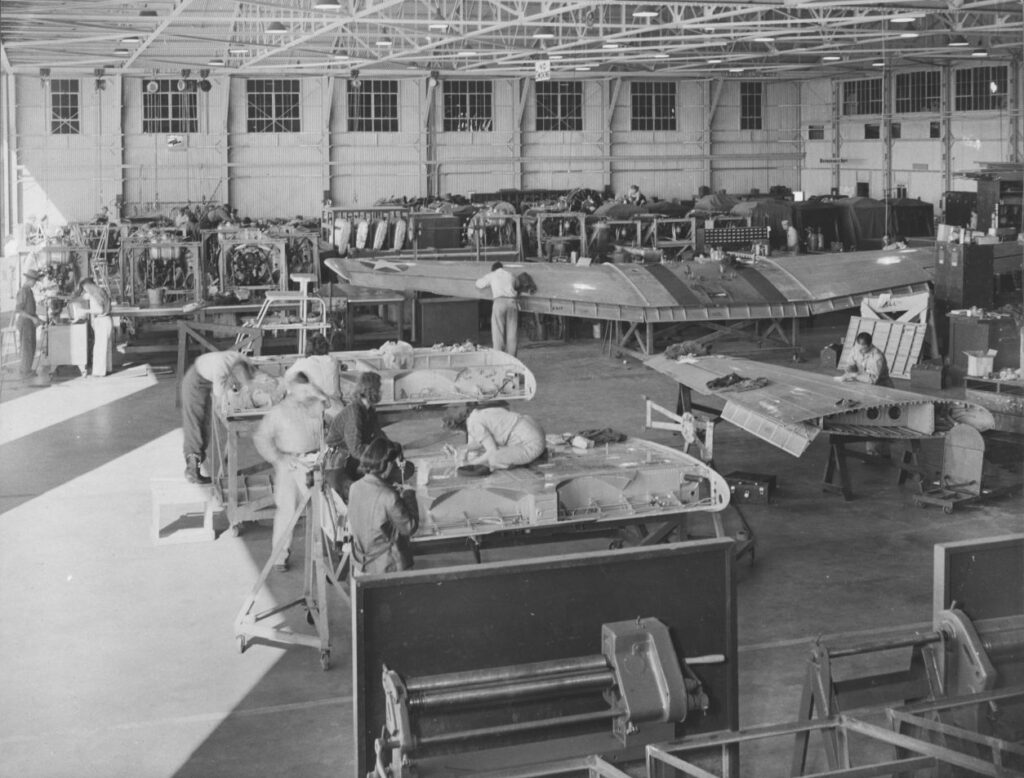
In the foreground, one male and six female civilian employees work on repairing two Center Wing Boxes. The Center Wing Boxes were very important because they connected the rest of the wings to the fuselage. About half way back in the hangar is an assembled wing. One can easily see the Center Wing Box on that wing. (Luke Field Photographic Section)
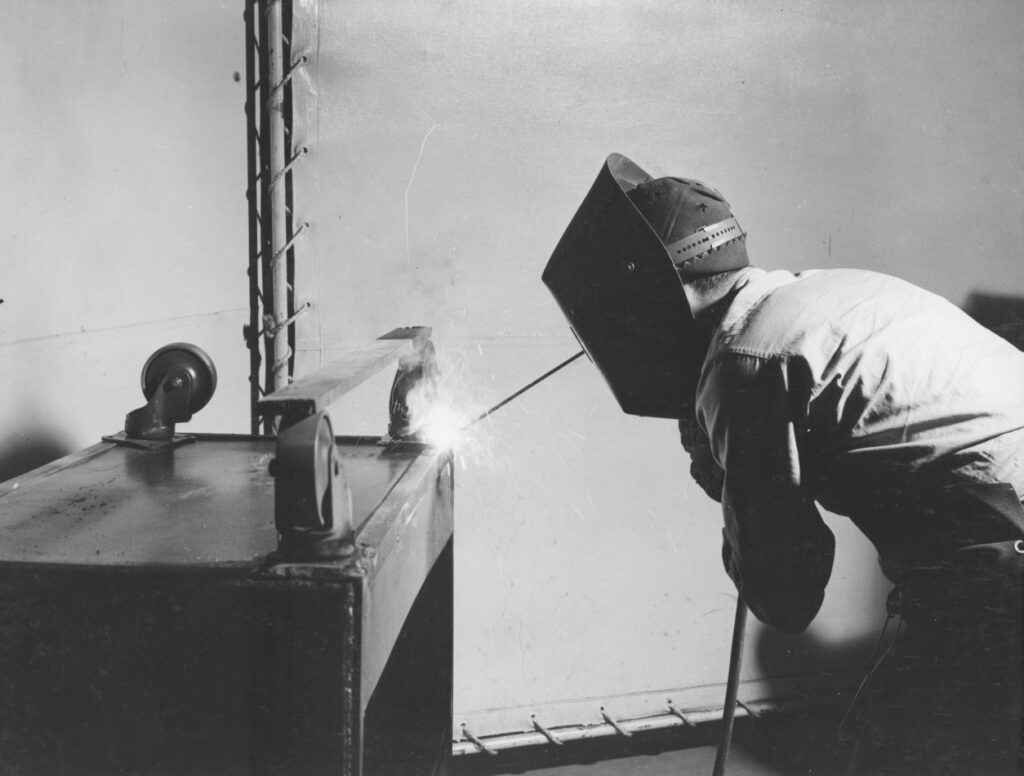
Considering all of the metal used on aircraft and equipment all over Luke Field, welding was a required skill. This welder is permanently connecting the wheel assemblies to a metal box, probably a tool box of some kind. (Luke Field Photographic Section)
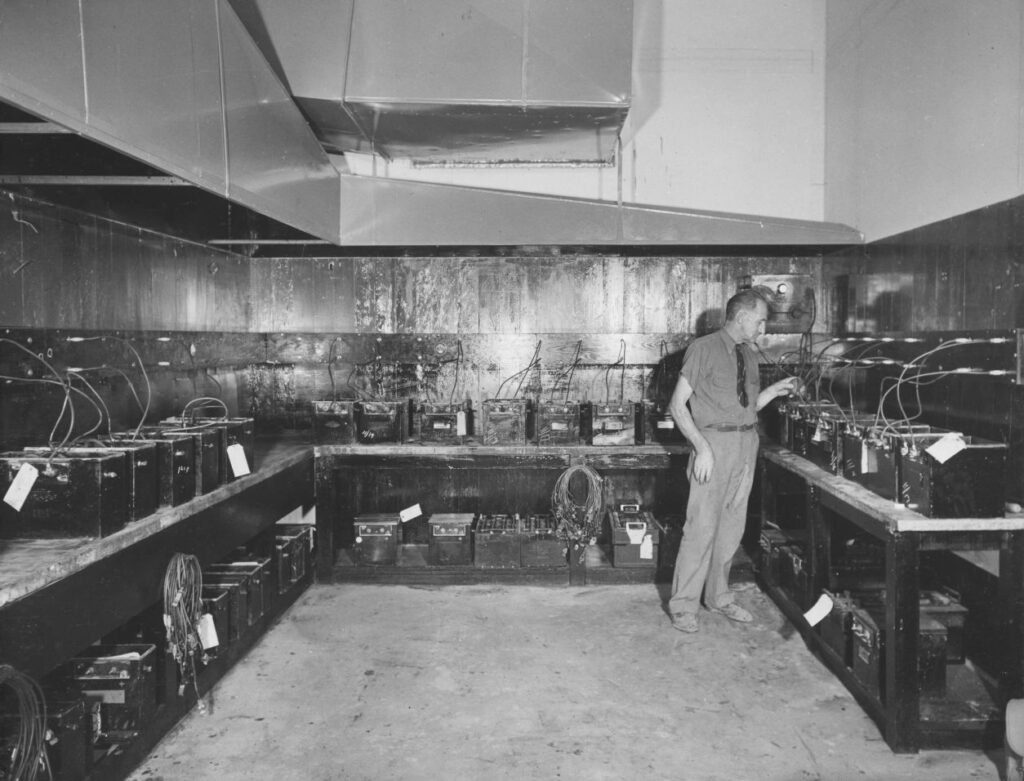
Each AT-6 Texan required a battery to start the engine and power its few electronic devises required prior to the start sequence. Battery technology at the time was the lead-acid battery. Here is the Electronical Department’s Battery Room. The walls are covered with metal to hold up against the acid. Most of the batteries on the top shelf are be charged. Because the fumes created during recharging were dangerous, a vent system was a necessity. (Luke Field Photographic Section)
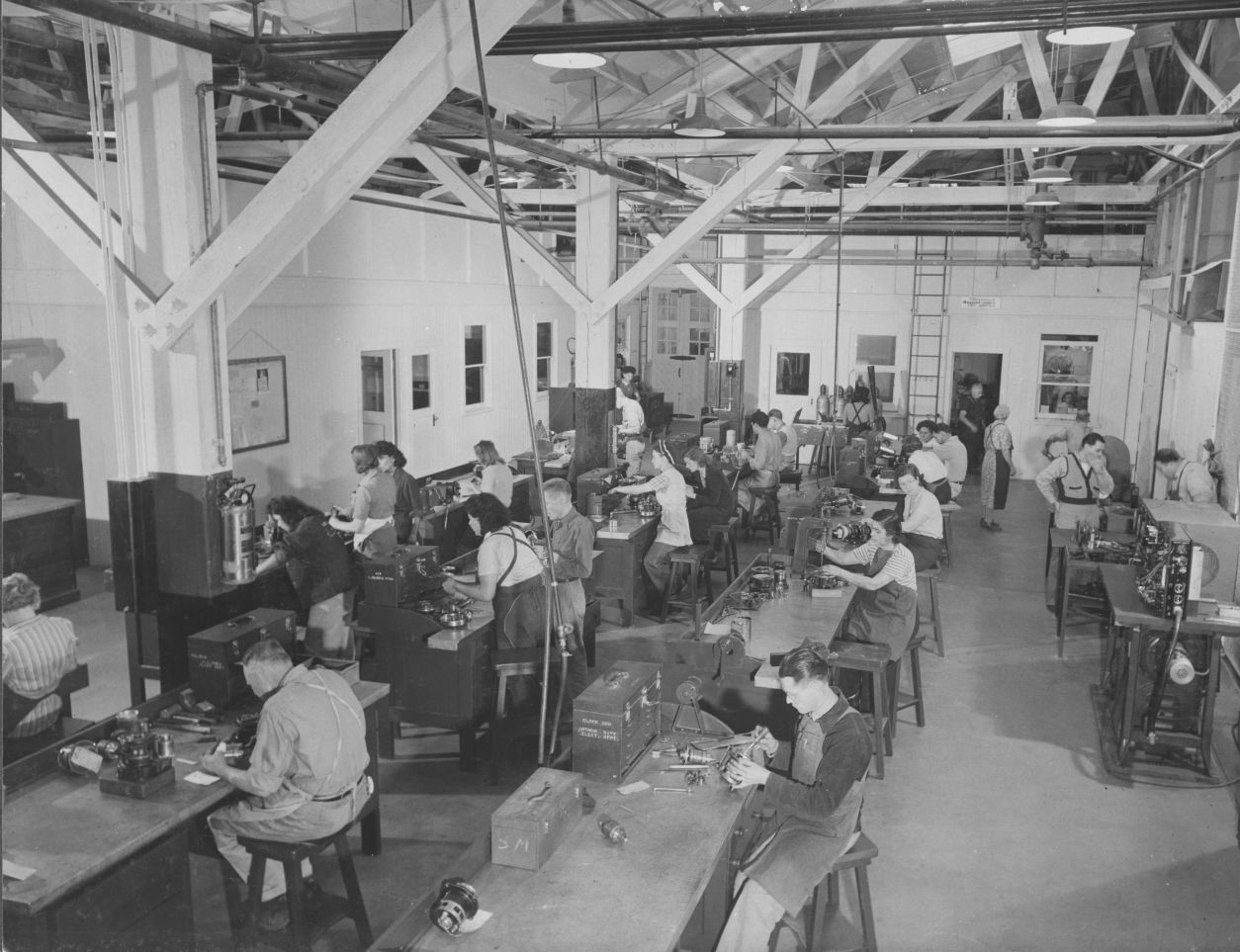
AT-6 Texan’s Pratt & Whitney R-1340-49 engines used a generator to make electricity to keep the engine running after start and power all electronic devises onboard. After a certain amount of use, the wire coils and brushes that make the electricity wear and need to be repaired or replaced. This busy room is the Electrical Department’s Generator Repair Section. (Luke Field Photographic Section)
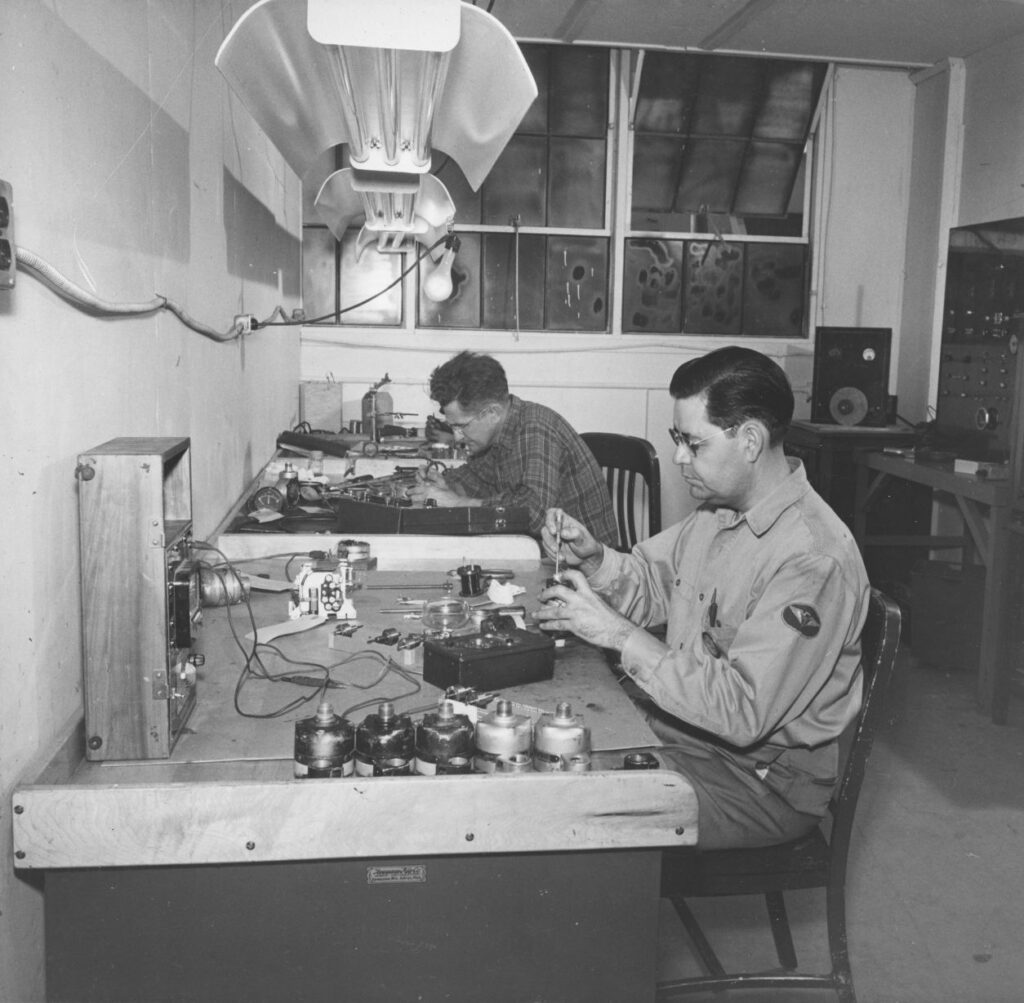
The 87th Sub-Depot also repaired electronic aircraft instruments. Repair for those instruments went to the Electronic Department’s Electrical Instrument Repair Section. (Luke Field Photographic Section)
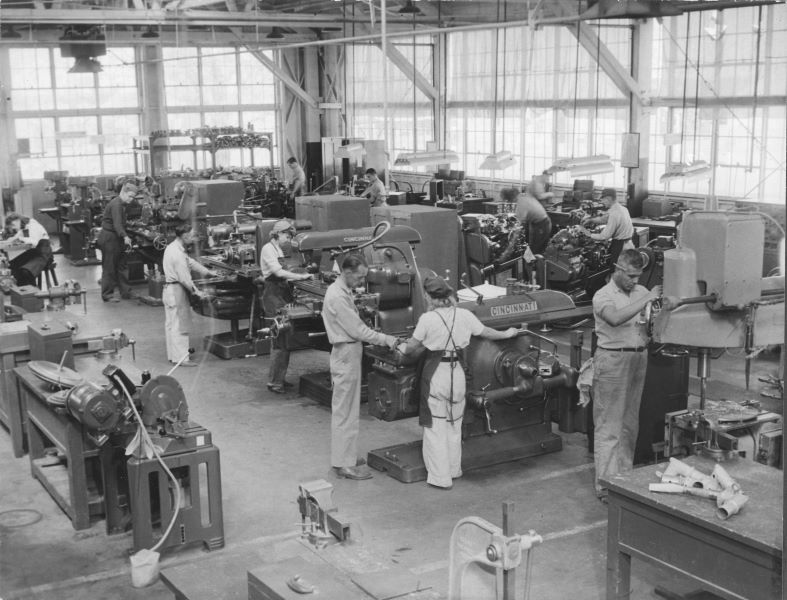
When required, the 87th Sub-Depot had to manufacture metallic parts. That requirement meant a Machine Shop for Luke Field. This shop contained a number of turret lathes, designed to create interchangeable parts by duplicating the same cuts over and over again. Of the twelve workers in this photo, four are female. (Luke Field Photographic Section)
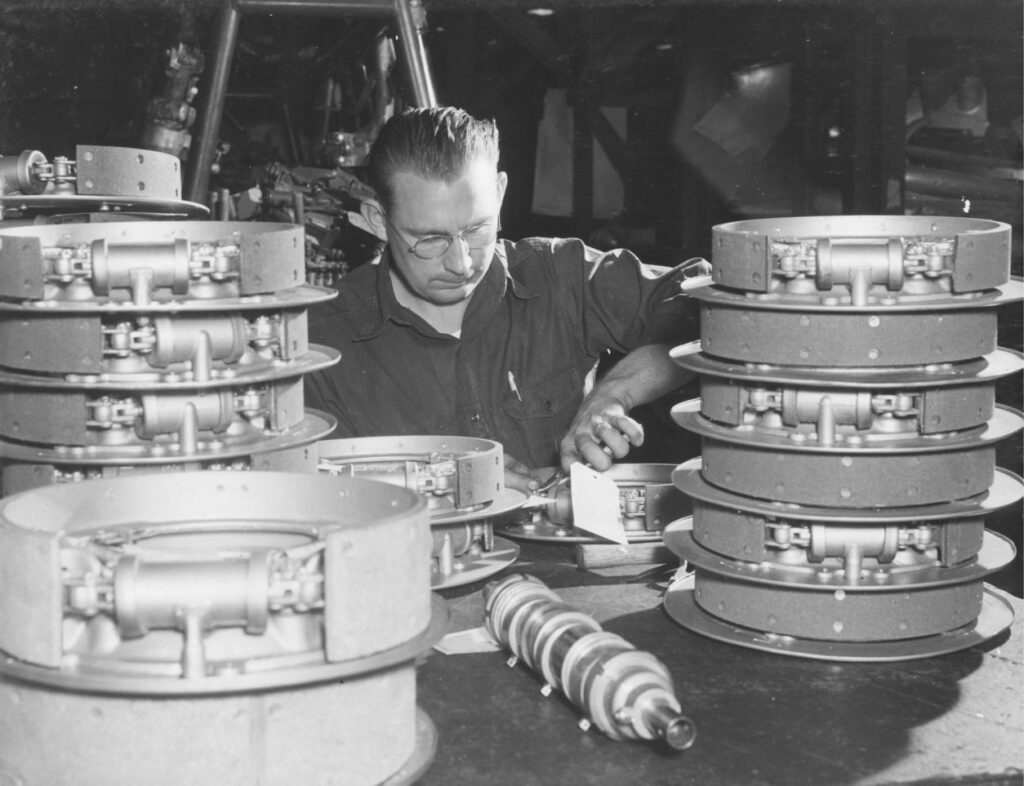
Aircraft brakes get a lot of use and wear out quickly. Since they are hydraulically actuated, the Hydraulic Section repaired them. For the AT-6, the brakes were a single shoe that when actuated expanded to make contact with the drum. The drum was attached to the wheel thus slowing and stopping the aircraft. This hydraulic worker is replacing the shoe on a brake. All of the other brakes in this photo appear to have new shoes installed. (Luke Field Photographic Section)
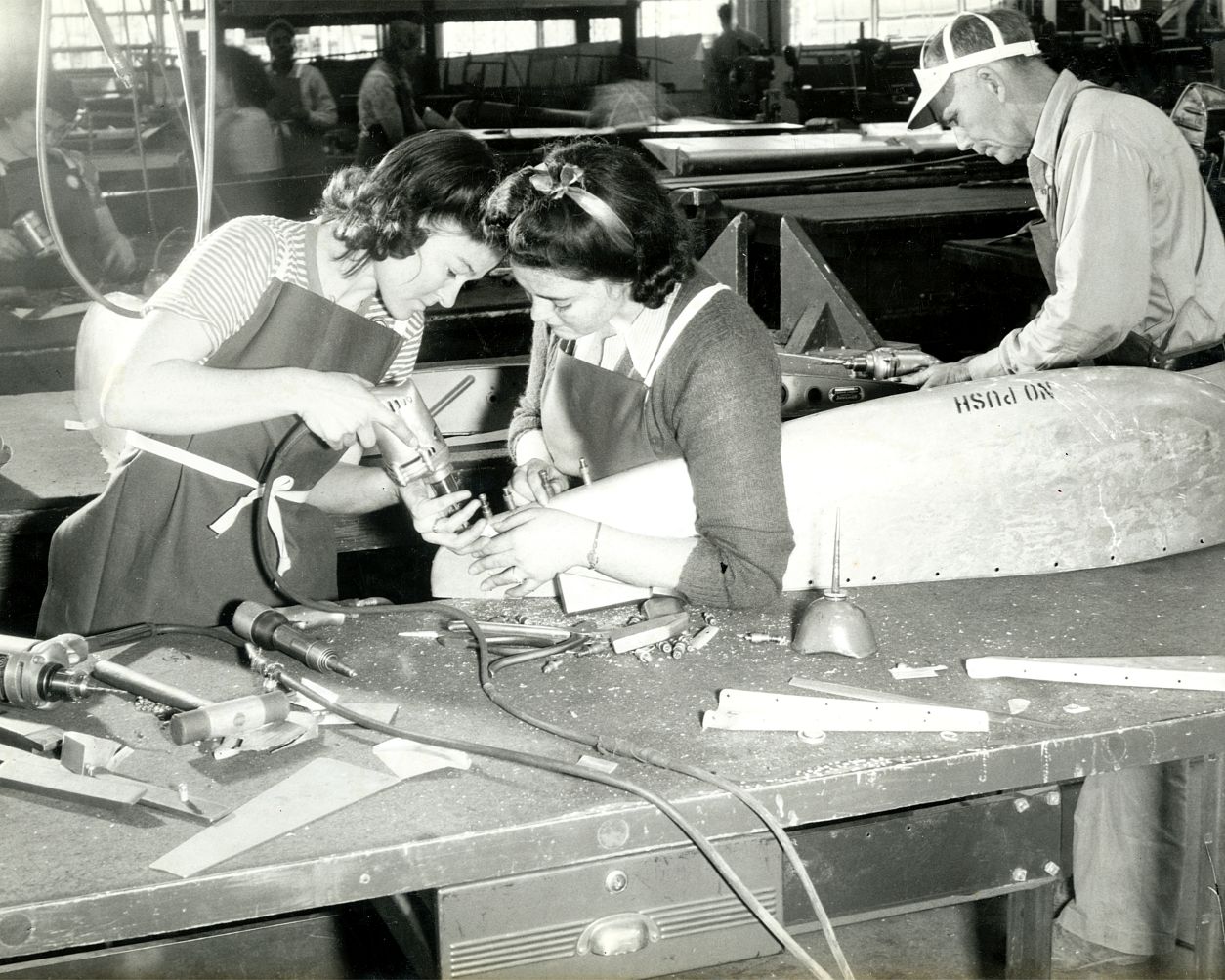
Since most of the outside skin of the AT-6 Texan was thin sheets of metal, the 87th Sub-Depot needed a Sheet Metal Section. In fact, the people shown working the Center Wing Boxes were part of the Sheet Metal Section. Here two sheet metal workers are drilling holes to either put rivets in or take them out of a Wing Tip assembly. (Luke Field Photographic Section)
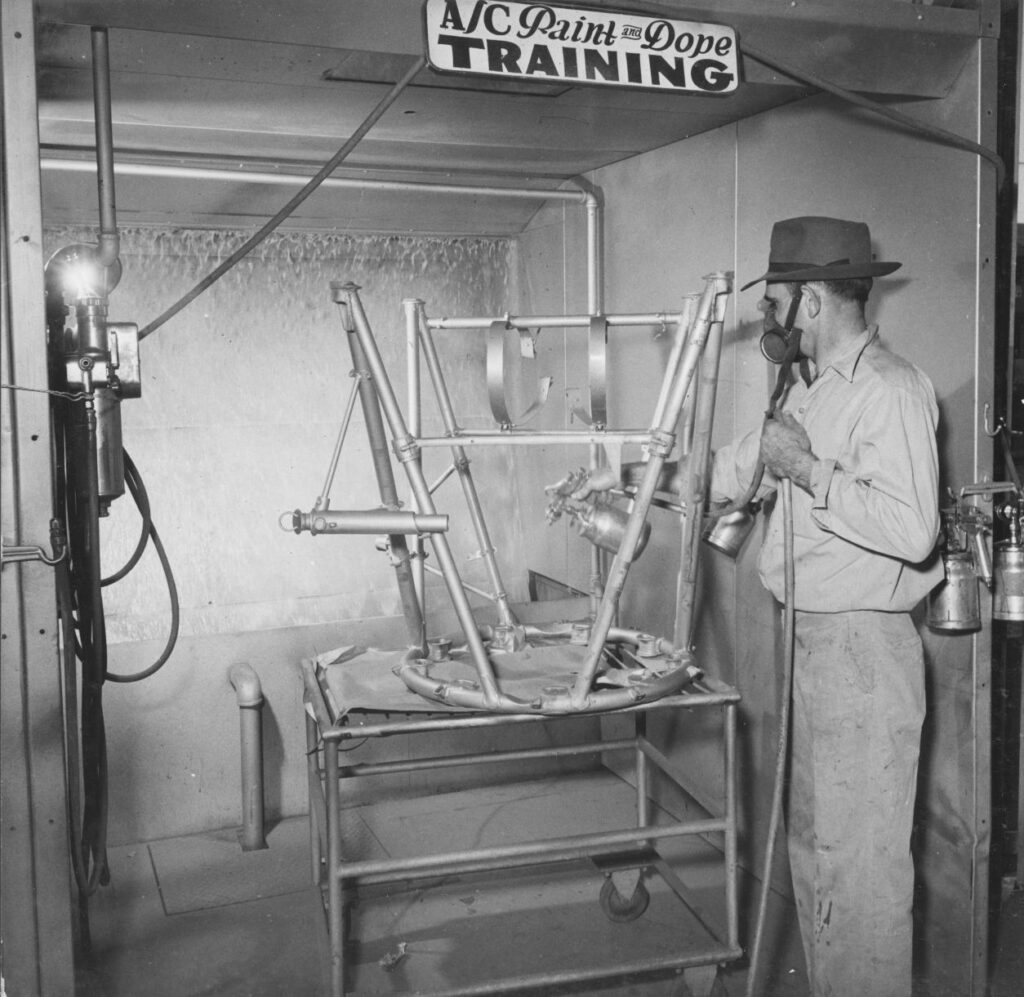
For anyone who has tried to spray paint something quickly realizes it is not as easy as one originally thought. Therefore, the 87th Sub-Depot needed to have some place to train new employees. This training paint booth could handle both paint and dope. Here a painter learns how to use a spray gun. (Luke Field Photographic Section)
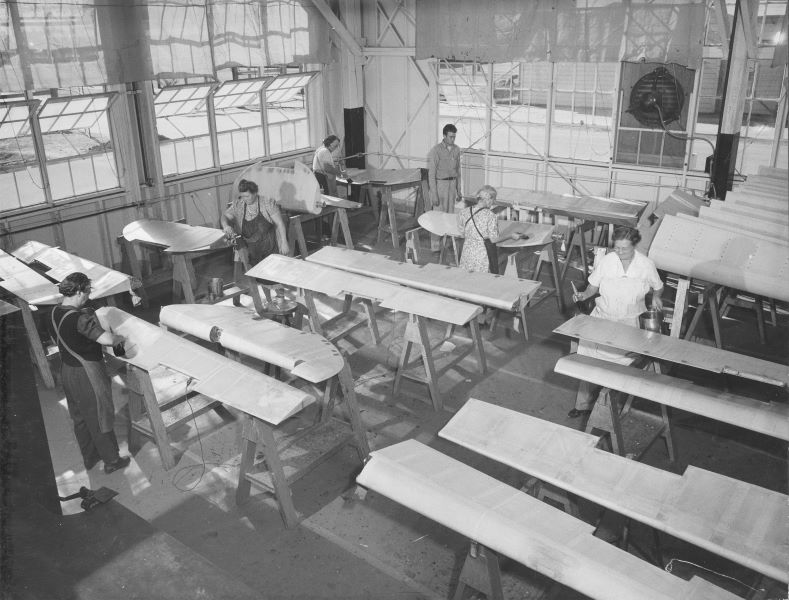
Not all doped parts were sprayed. These fabric flight control surfaces are being hand painted with aircraft dope. Aircraft dope tightened the fabric and made it wind resistant and waterproof. Unfortunately, aircraft dope very quickly gives one a headache. To reduce the effects, ventilation was the key. Notice the large fan and many open windows. (Luke Field Photographic Section)
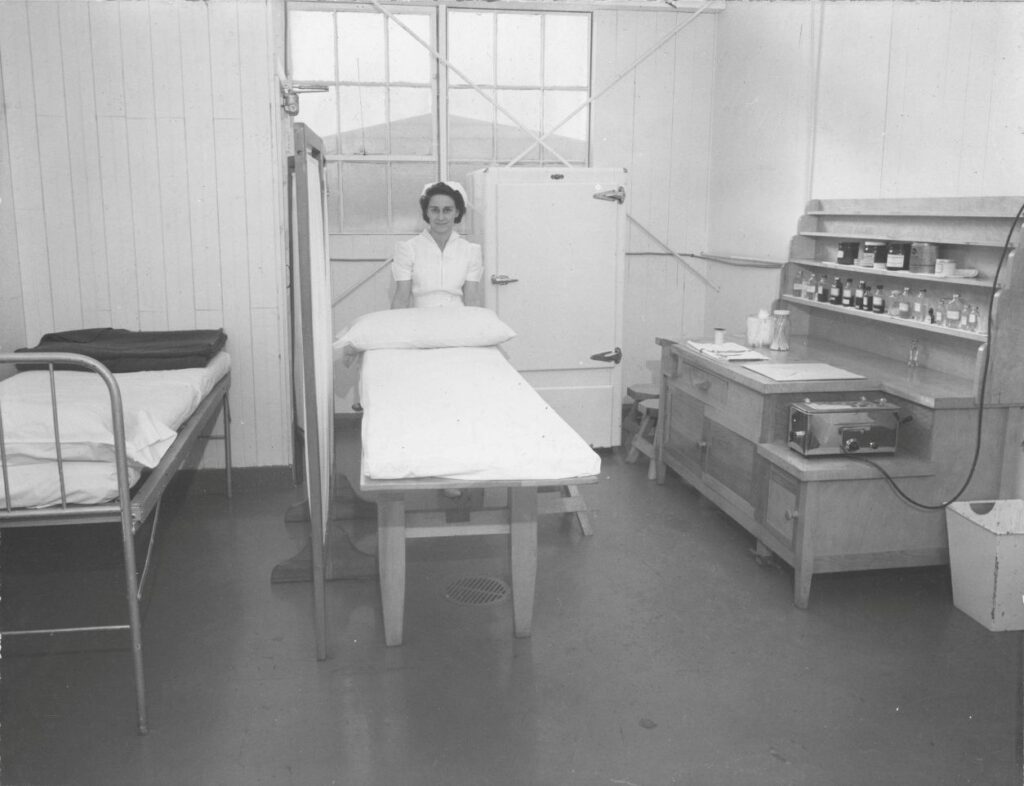
The 87th Sub-Depot had a First Aid Room and a nurse to take care of minor medical issues. Besides the many dangerous processes and materials used at the Sub-Depot, the Sub-Depot was also on the far end of the field from the hospital. At the very least, the nurse could triage patients. (Luke Field Photographic Section)
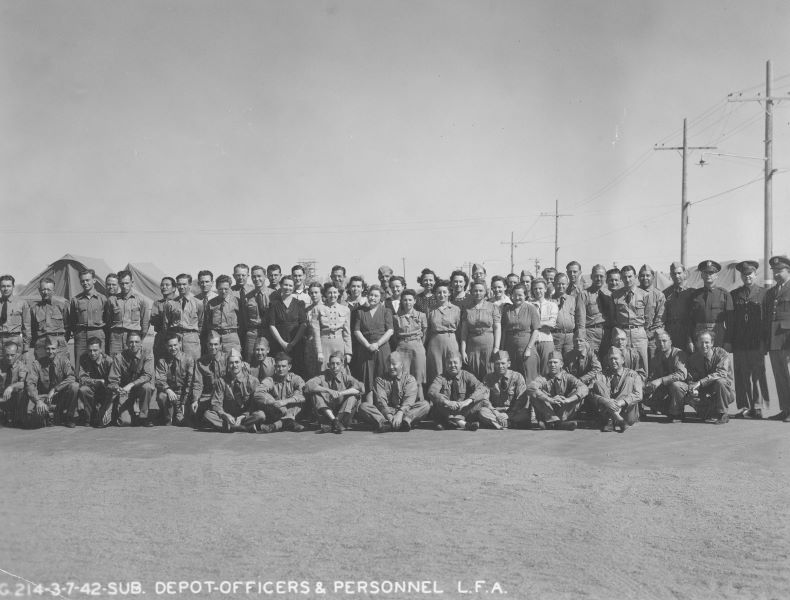
Taken on March 7, 1942, the officers and personnel the 87th Sub-Depot paused their day to have their picture taken. (Luke Field Photographic Section)
For more information about the Headquarters and Supply functions of the 87th Sub-Depot click on this link